
- 2nd Nov 2026
- 4 min read
Eating with the Seasons: Practical Ideas for Autumn and Winter
Explore seasonal eating through warming cooking methods, a simple vegetable-soup framework and manageable changes to your autumn and winter meals.
Eating with the Seasons: Practical Ideas for Autumn and Winter
When it is cold outside, a bowl of soup or a slowly cooked casserole can feel more inviting than the lunch you enjoyed in July. Seasonal eating starts with noticing that change, then finding meals that fit your appetite and the time you have.
In Chinese dietary therapy, the season influences both the ingredients we choose and how we prepare them. Here are some practical ways to explore that approach as autumn moves towards winter.
Seasonal eating includes how you cook
Choosing food in season is one part of the picture. The cooking method matters too: autumn and winter guidance in Chinese dietary therapy favours soups, stews, casseroles and roasting, while the warmer months invite lighter preparation.
You can explore this through familiar meals. Think about a vegetable dish you already enjoy and whether a cooked version would appeal today. You might prefer a broth with some texture, a smooth soup or a casserole that can cook while you get on with something else.
“Warming” here describes a food or cooking method within Chinese medicine. It does not simply mean making everything very hot or adding lots of chilli.
A useful framework for vegetable soup
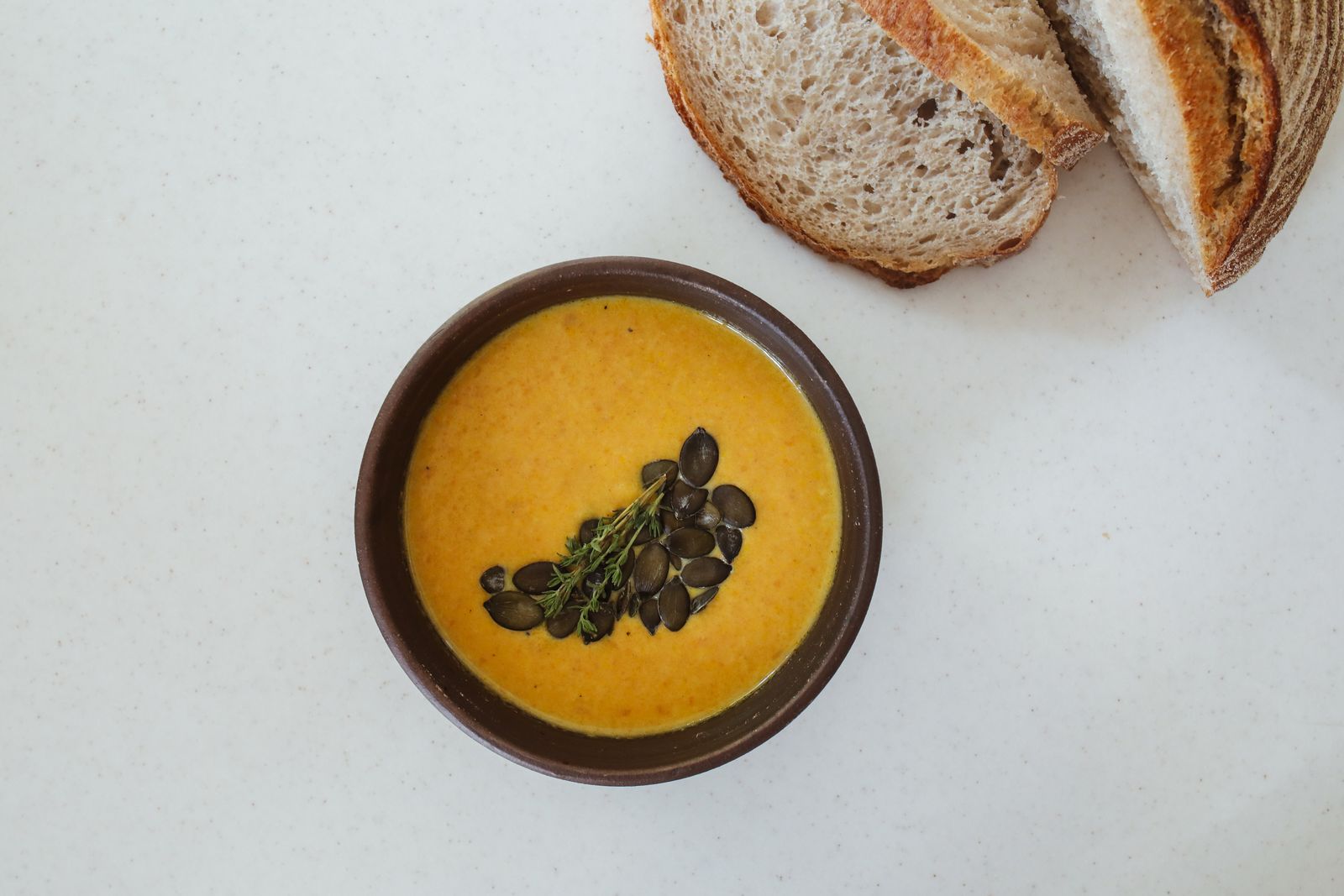
Greg and Danny’s basic vegetable-soup method gives a helpful structure to follow. The vegetables, flavourings and liquid come from the particular recipe you choose:
- Gently cook the onion and garlic in a little oil until translucent.
- Add the recipe’s herbs or spices and cook briefly until fragrant.
- Add the prepared, chopped vegetables.
- Pour in the specified liquid, bring it to the boil, then cover and simmer until the vegetables are cooked.
- Blend if the recipe calls for it, then season.
Learning that sequence can make a soup recipe feel less like a long list of separate tasks. You are building flavour first, cooking the vegetables in liquid, then deciding on the final texture.
Let herbs and gentle spices do some of the work
The book includes spiced parsnip soup, smooth fennel soup, and carrot and coriander soup. These offer different flavours within the same broad method.
For example, the fennel soup uses fennel seeds with fennel and carrots. The carrot and coriander version finishes with fresh coriander and lime zest. These combinations come from the book; they give you a concrete starting point when choosing a recipe.
Choose a flavour you enjoy rather than assuming the spiciest option is the most suitable. The seasonal approach makes room for gentle, aromatic meals too.
Make one change you can repeat
Start with one cooked lunch or evening meal that fits your week. Before buying ingredients, check what the chosen recipe needs and how long it takes. A meal you can prepare on an ordinary Tuesday is more useful than an ambitious plan you rarely have time for.
The book suggests freezing soup in meal-sized portions. That can make it easier to have a cooked lunch available on a busier day.
You can also give the meal a little space in your day: sit down if possible, eat at an unhurried pace and allow yourself to enjoy it. How we eat is part of the book’s approach alongside what we put in the bowl.
Keep your own needs in view
Seasonal guidance is a starting point. Your appetite, preferences and digestion still matter, and the same meal will not suit everyone. If you follow a prescribed diet, keep to your healthcare team’s advice.
For this week, try choosing one recipe, using a cooking method that appeals in the colder weather, and making time to eat it. That is a practical way to begin.
Seasonal ideas and the vegetable-soup method are adapted from Chinese Dietary Wisdom, by Danny Blyth and Greg Lampert.